The Warrior in the Courthouse Line
- Civilization
- Japan
- Material
- Paper & land
- Period
- c. 1280 AD
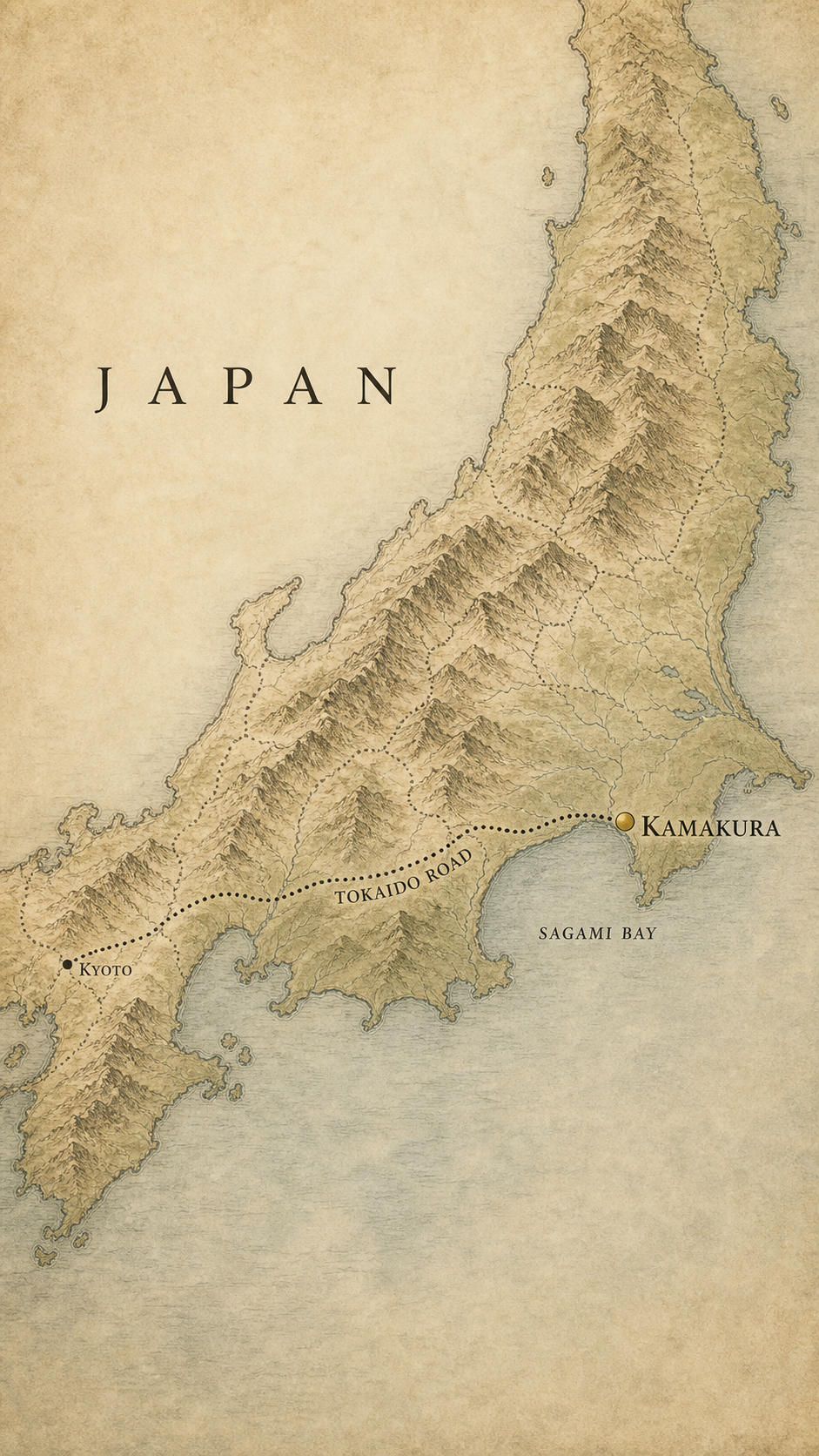
A day in the life of a samurai in feudal Japan, 1280 — the gokenin vassal warrior whose real battles ran through the Kamakura courts: decades-long inheritance suits, an eavesdropper who lost his case for creeping, and the scroll a veteran filed to claim his reward.
A government that was mostly a courthouse
The Kamakura shogunate ran on a bargain: warriors served, and in exchange the bakufu protected and confirmed their landholdings. In samurai Japan, protecting rights in land meant adjudicating them, and the paper trail is enormous — petitions, answers, rejoinders, summonses, sworn statements, interim orders, judgments, and appeals. The warrior government's own law code, the Goseibai Shikimoku of 1232, devotes much of its fifty-one articles to possession, inheritance, official misconduct, pleading, evidence, and penalties for abusive litigation. The samurai of legend fights duels; the samurai of the documents files lawsuits.
The cases in the episode are real files
The default-judgment rule is Article 35 of the code: after a defendant ignored three summonses, the court could proceed without him. The eavesdropper is the gokenin Nakahara Yasusada, who in 1226 — while the council deliberated his years-long land dispute with Ōya Ieshige — crept behind the council chamber, listened, and accused the judges of bias. Officials expelled him from the compound; three days later Kamakura prohibited litigants from approaching council members during deliberation, and the land went to his opponent because of his conduct. The thirty-four-year case is the Hosokawa inheritance: the widow known as Nun Abutsu traveled to Kamakura around 1279 to press her son's claim and died without seeing it resolved; judgment finally came in 1313. And the temple that sued hardest is Kōyasan's Kongōbuji, which alleged in 1232 that a warrior family had turned an office contracted for one steward and one deputy into some twenty appointees — the verdict, three years later, ordered both sides back to the written terms of 1217.
The most beautiful expense report in history
After the Mongol invasions of 1274 and 1281, a defensive war left little conquered land to hand out, and reward claims required travel, testimony, and documentation. The samurai Takezaki Suenaga commissioned an illustrated scroll — the Mōko Shūrai Ekotoba — documenting his deeds to support his claim. It worked: the scroll shows the horse he received. By 1297 warrior indebtedness ran deep enough that the bakufu issued the Einin tokusei edict, cancelling certain gokenin debts and land sales outright — once. Creditor confidence never fully recovered: later deeds began carrying clauses in which sellers promised not to invoke any future cancellation. The fighting is what survived in legend. The filing is what survived in the archives.
Sources
- Goseibai Shikimoku (1232), arts. 14, 29–31, 35 — summonses, default after three ignored summonses, delay complaints, appeals, judicial bias
- Jeffrey P. Mass, The Kamakura Bakufu: A Study in Documents (1976) — 177 translated Kamakura edicts and land records
- Azuma kagami (late 1226) — Nakahara Yasusada vs Ōya Ieshige: the eavesdropping, expulsion, the three-day rule, and the award to Ieshige
- Carolina Negri, 'Izayoi nikki: The History of a Disputed Heritage in the Kamakura Period', Annali di Ca' Foscari 56 (2020) — Nun Abutsu and the 1279–1313 Hosokawa case
- Kamakura ibun docs. 4534, 4605; Kamakura bakufu saikyōjōshū doc. 57 — the Kongōbuji vs Miyoshi jitō suit over Ōta estate, 1232–35
- Delmer M. Brown, 'The Japanese Tokusei of 1297', Harvard Journal of Asiatic Studies 12 (1949), 188–206; Tōji Hyakugō Monjo — the Einin debt-cancellation edict
- Thomas D. Conlan, In Little Need of Divine Intervention (2001) — Takezaki Suenaga's scrolls and the reward-claim process
- Mōko Shūrai Ekotoba (c. 1293; later copy) — National Diet Library digital collections, public domain
Tell us in the comments — the next episode is picked from what you ask for.
Subscribe on YouTube Watch the seriesMore from the series
The Lender Who Bet Against the Sea
The Weapon Was Not the Blade